Fashion circularity along with sparing the environment could generate up to $700 billion in business opportunities by 2030, according to the Ellen MacArthur Foundation.
The United Nations Environment Program (UNEP) has worked with clothing makers to cut greenhouse gas emissions, phase out toxic chemicals and reduce water use. Clothing production is a driver of climate change, a voracious consumer of raw materials, and in some places, a significant source of pollution.
Between 2000 and 2015, clothing production doubled globally, according to the Ellen MacArthur Foundation. This rapid growth has expanded the industry’s impact on the environment. Experts say the pain is felt more acutely in developing countries. One study published in the journal Springer Nature found that more than 15,000 chemicals are used in making textiles. As well, producing just 1 kilogram of textiles takes over 0.5 kilograms of chemicals.
UNEP’s InTex Program contributing to fashion sustainability:
To help change that, UNEP launched the InTex program in 2020. Officially called the Innovative Business Practices and Economic Models in the Textile Value Chain, InTex is funded by the European Union and Denmark. It focuses on small- and medium-sized enterprises, which are the vast majority of the world’s textile manufacturers, in five nations: India, Indonesia, Kenya, South Africa and Tunisia. InText is part of UNEP’s broader Textile Initiative, which aims to create a cleaner, more sustainable textile industry.
At the core of InTex is the idea that the textile industry must move off its linear business model, where resources are gobbled up to make flimsy, disposable clothes. InTex touts a model where garments are made to last, material is recycled, and the use of resources – from water to chemicals – is kept to a minimum.
Tunisia’s Gonser Group taking major strides:
Tunisia’s Gonser Group, a clothing maker, has taken major strides under InTex towards fashion sustainability.
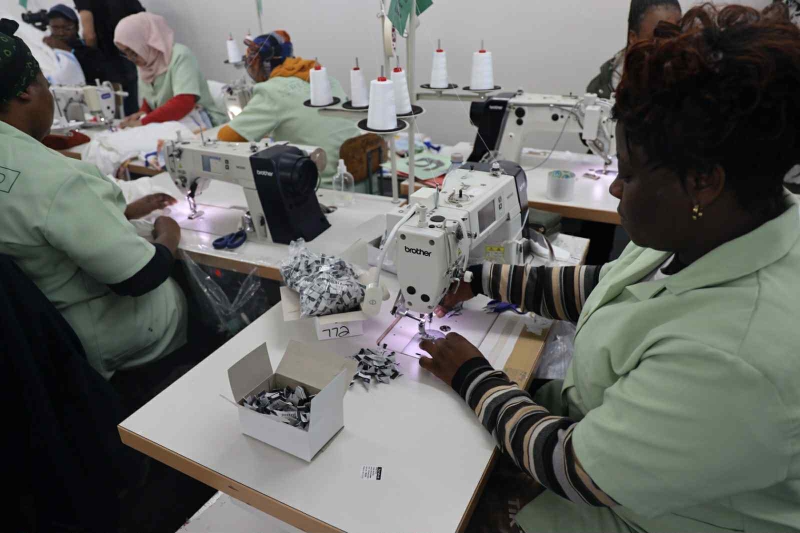
With UNEP’s help, Tunisia’s Gonser Group, a clothing maker, did a deep dive into the environmental footprint of the denim it produces in a factory outside of Tunis, the Tunisian capital. The factory produces 600,000 garments a year.
Gonser Group developed an energy management platform to track in real time the use of water, steam and gas in the factory.
Bilel Ben Miled, the head of sustainability at Gonser Group, said the system, expected to launch later this year, will help the company spot waste and become more resource efficient, key in a country facing severe water shortages.
Gonser Group also plans to install 300 kilowatts of solar panels on the factory’s roof by 2026, which would cut electricity use by 40 percent. And it’s evaluating an automated chemical dosing system that could cut the factory’s chemical use by 25 percent.
“We need to reduce our environmental footprint if we’re going to leave a better world for our children and the following generations,” says Ben Miled.
The work with InTex is part of a broader sustainability push by the Gonser Group. Ben Miled says the company recycles up to 90 per cent of its water. The firm has also certified that more than 90 percent of the chemicals it uses meet an environmental standard developed for apparel makers.
Gonser Group is a major supplier to European brands, many of which are facing stricter environmental rules, especially on chemicals use. One of the big benefits of UNEP’s InTex program is that it helps companies improve efficiency, cut costs, and meet the growing demand from sustainable markets in the EU.
“Brands are so engaged now when it comes to the environment,” Ben Miled says. “If we want to continue our business activities and expand our markets, we need to invest in sustainability.”
“The world is realizing that we need to change our approach to fashion and textiles,” says Elisa Tonda, Chief of UNEP’s Resources and Markets branch. “We need to design products to be reuseable, durable and recyclable in order to protect the planet from the effects of pollution and waste.”